GALLERY WOO | Booth B22
HAN CHOONG-SEOK | 한충석 ( 1981 ~ )
At ART TAIPEI 2026, Han Choong-Seok presents works from two series, Relationship Practice and I Won’t Be Shaken.
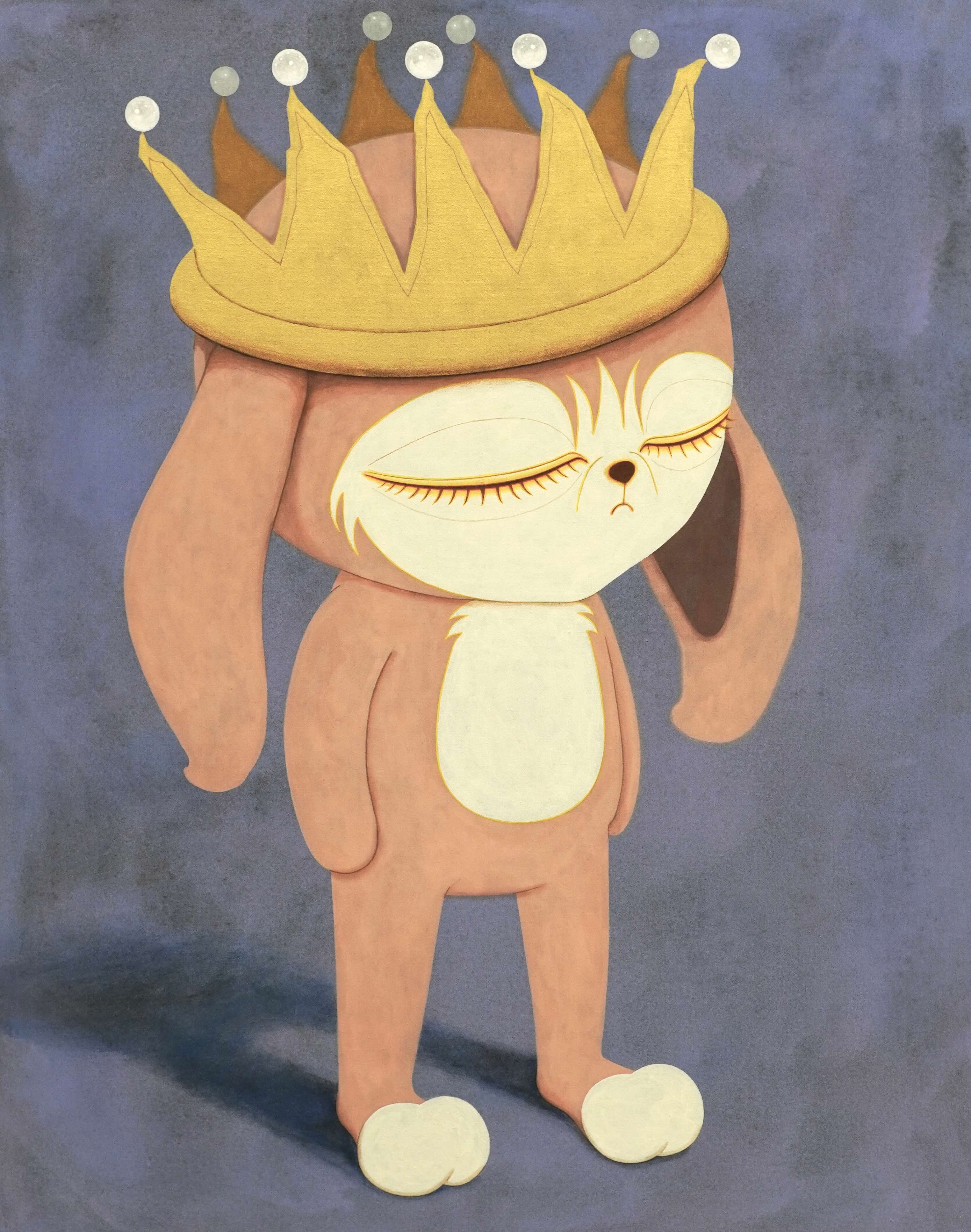
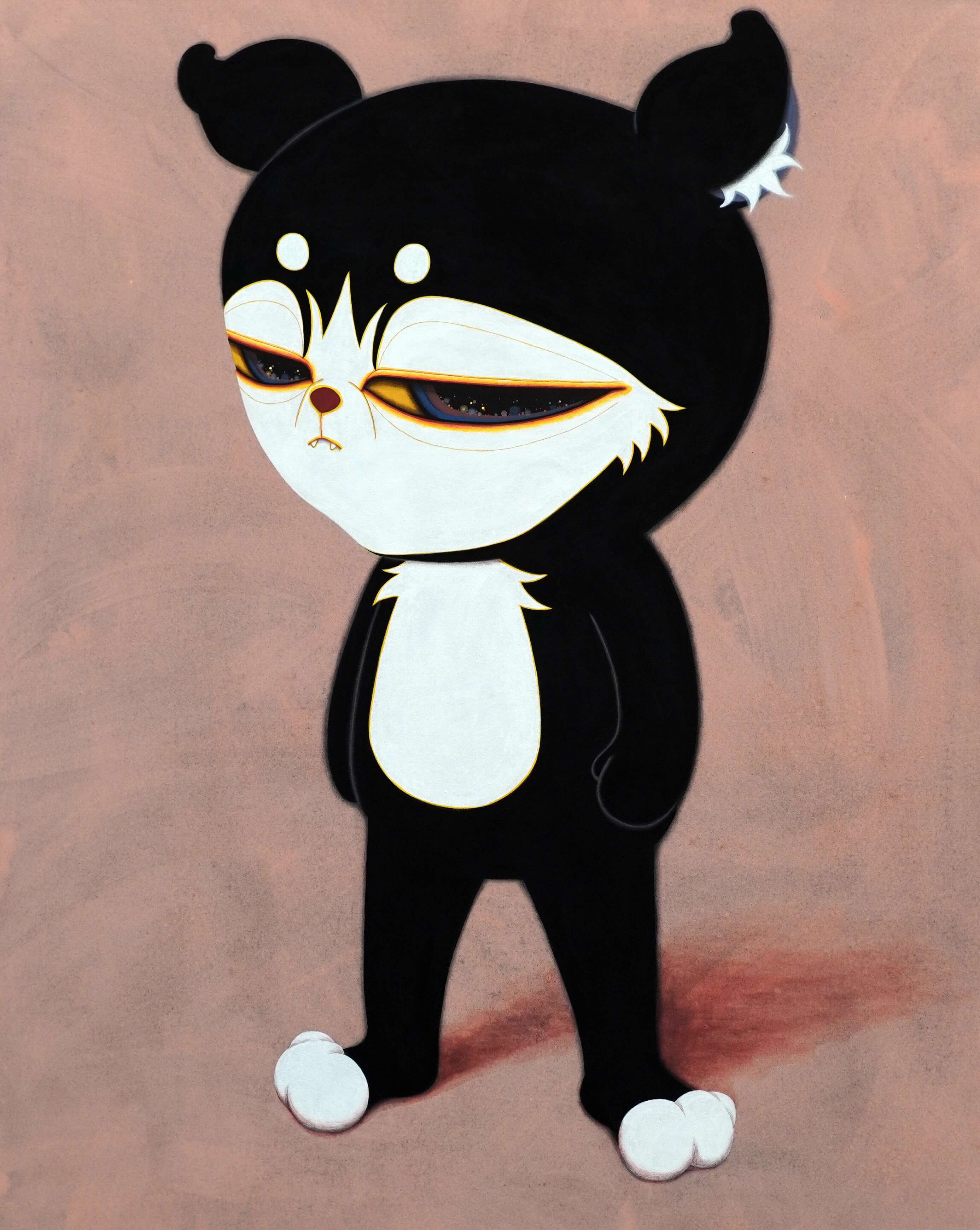
I Won’t Be Shaken
Confucius said that upon reaching the age of forty, he was no longer confused. Buhok (不惑), meaning “free from doubt.” This can be understood not as having become free from all the uncertainties and disturbances of the world, but as having gained the ability to discern for oneself what is worth protecting.
Not being shaken does not mean remaining motionless. Just as a tree sways in the wind without losing its roots, the mind also finds its own center amid moments of uncertainty.
The figures in Han Choong-Seok’s works possess gazes that are both calm and firm. Their expressions seem as though they are about to say something, yet they do not easily reveal their inner thoughts. At times, they appear to gaze directly at the viewer, but perhaps their eyes are directed toward the depths of their own inner selves.
What can be felt in their gazes is less a sense of strong resistance or firm conviction than an attitude of quietly protecting their own world. Within that stillness remain emotions and the passage of time that cannot easily be explained.
“I won’t be shaken.”
To be shaken, yet not lose one’s center.
Perhaps a strong mind is not one that never wavers, but one that does not lose itself even amid moments of uncertainty.
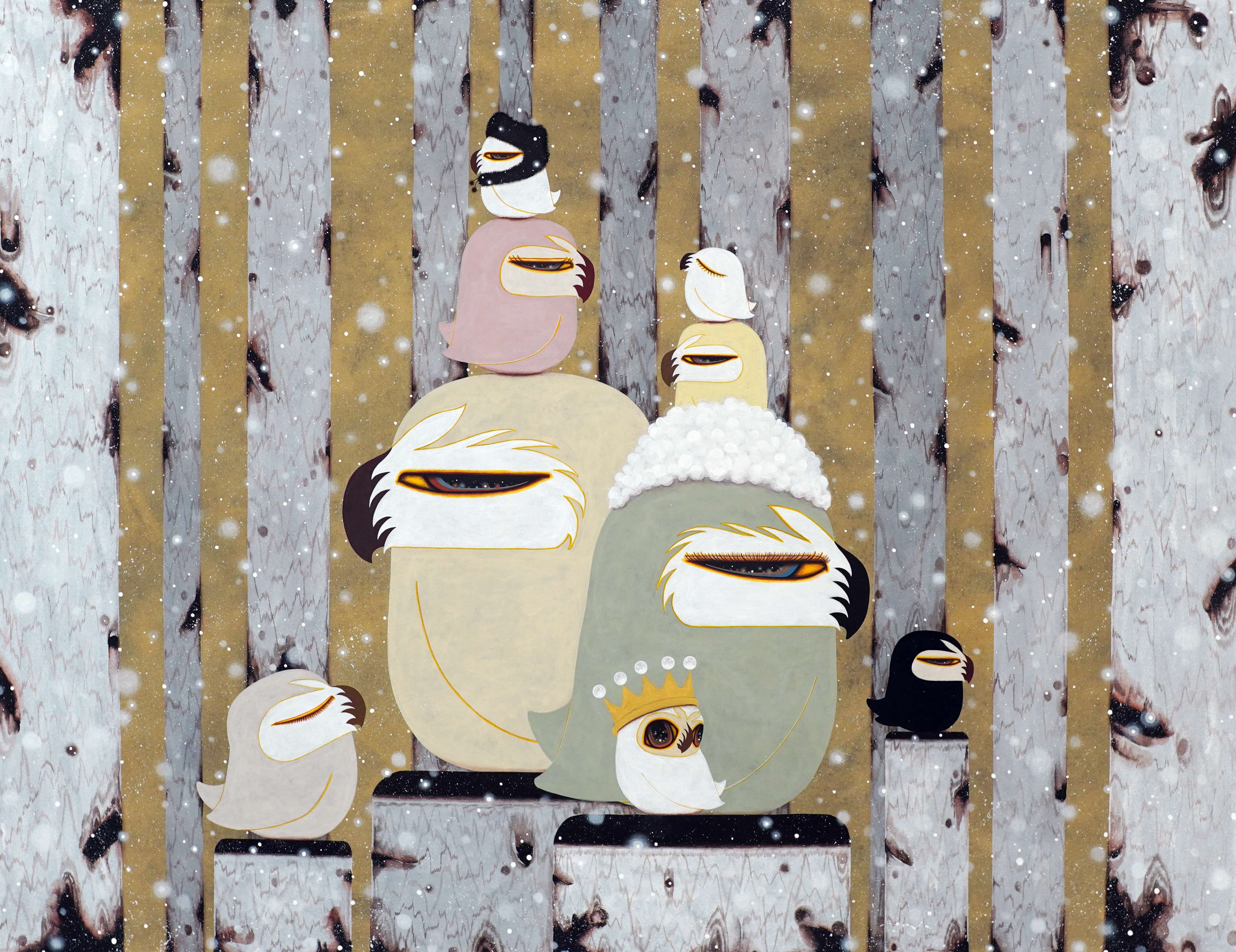
Relationship Practice
A relationship (關係) refers to “the state in which two or more individuals or entities are connected to one another, or the act of forming such a connection.” Relationships are formed from the moment we are born. Therefore, the starting point of relationships inevitably begins with family.
For a relationship to develop, time is needed to become familiar with one another. It is, in a sense, a period of maturation for the relationship. This is why relationships also require practice. Even family, the closest and most inevitable relationship bound by fate, is no exception.
The roots and foundation of Han Choong-Seok’s paintings lie in the process of clarifying the nature of relationships. The relationships we believe we know may, perhaps, “not have begun yet, still be ongoing, or have already come to an end.” It is also possible that the relationship we believe we have formed exists only in our own imagination.
Why, then, is Han Choong-Seok so deeply preoccupied with the question of establishing relationships with others and the ways in which we communicate?
In short, Han’s paintings represent “the process of translating the human defensive instinct arising from relationships into artistic work.”
...
To summarize a few key concepts through which his paintings can be understood, they include relationships, sensitivity to others’ reactions, self-esteem, solitude, and the hedgehog’s dilemma.
Among these, the “hedgehog’s dilemma” is a central element expressing the artist’s “defense mechanism.”
As long as life continues, we cannot avoid forming various relationships. In this process, we inevitably become conscious of how others perceive us, depending on whom we are dealing with.
Through the roles we play in hierarchical or equal relationships, we may gain a sense of self-esteem. Yet we must also inevitably live with “loneliness in a crowd.” This is precisely because of the “hedgehog’s dilemma.”
The hedgehog’s dilemma (also known as the porcupine’s dilemma) is a psychological term referring to “a contradictory state in which the desire for intimacy or attachment coexists with the desire for independence and autonomy.”
As if asking, “Can you be sure you won’t hurt me?”, the German philosopher Arthur Schopenhauer (1788–1860), in his final work, Parerga und Paralipomena, presented a solution to “the secret of happiness” through an allegorical story.
The inevitable relationship between hedgehogs, who “cannot come closer than a certain distance” because of one another’s spines, thus serves as a very important motif in Han Choong-Seok’s paintings.
— Excerpt from Painting Communication Through the ‘Space Between Relationships’, an art critique by Kim Yoon-Seop.